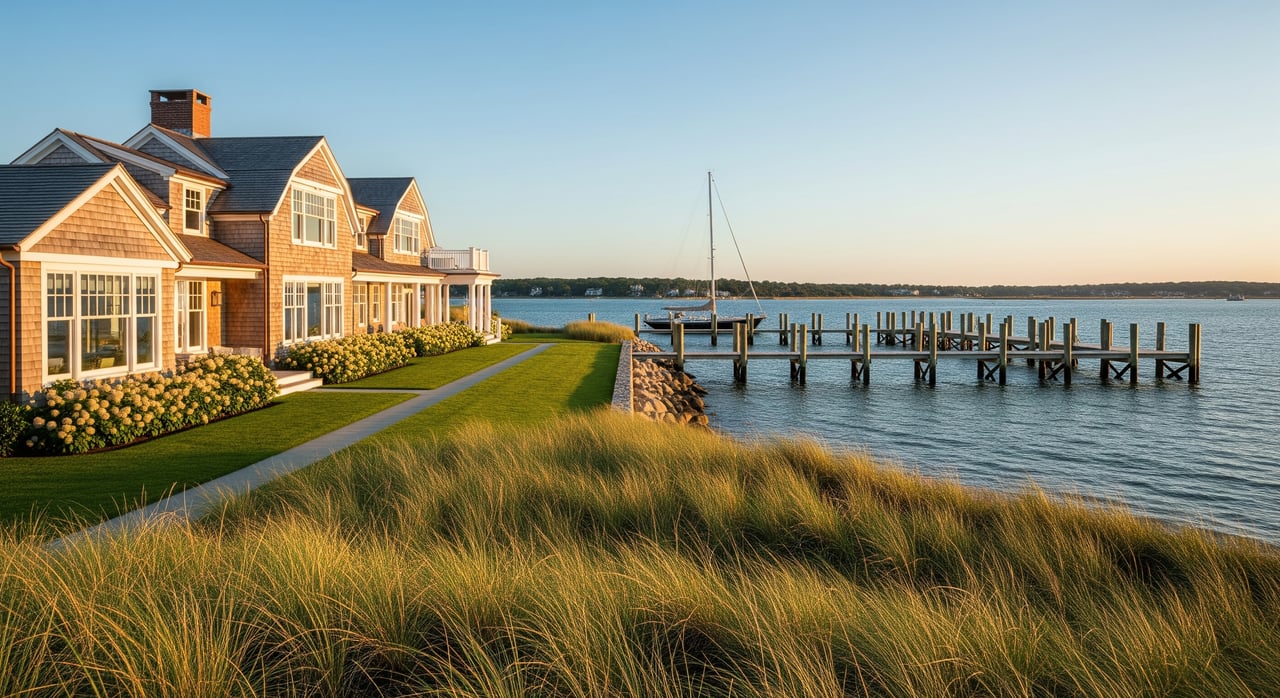
You are eyeing Eel Point for its privacy, dunes, and sunsets, but the financing feels complex. If your purchase price sits in the multimillion range, you will likely need a jumbo mortgage, which comes with different rules than a standard loan. The good news: with the right strategy, you can qualify smoothly, compare options with confidence, and even lower your long‑term cost. This guide breaks down what matters most for jumbo loans in 02554 and how to prepare for a successful closing. Let’s dive in.
What a jumbo loan means on Eel Point
A jumbo loan is any mortgage that exceeds the conforming loan limit set by the Federal Housing Finance Agency for your county. These limits change annually and are different by county. For Eel Point, you should verify the current limit for Nantucket County before you start shopping.
Lenders treat jumbo loans differently. You should expect higher down payment requirements, stricter credit standards, and more substantial cash reserves. In practical terms, buyers often bring 20 to 30 percent down, aim for strong credit profiles, and document multiple months of reserves.
What this means for your offer is simple. You want to show sellers proof of funds and a robust pre‑approval because jumbo underwriting can be more detailed than conforming loans. Being prepared helps you negotiate from a position of strength.
Choose the right jumbo product
Standard jumbo vs portfolio loans
Many large lenders offer standard non‑agency jumbo products that follow investor criteria. Pricing can be competitive, but documentation and reserve rules are usually stricter than conforming loans.
Portfolio loans are different. A bank keeps the loan on its books and can be more flexible with documentation, debt‑to‑income ratios, or unique property features. If you have complex income or significant assets, a portfolio lender can tailor terms to your situation.
Asset‑based options for complex income
If you have considerable liquid assets but irregular W‑2 income, ask about asset‑depletion or bank‑statement programs. Asset‑depletion turns a portion of your liquid assets into qualifying income. Bank‑statement programs look at 12 to 24 months of deposits to calculate income. These tools are common with private banks and can fit buyers with investments, business ownership, or retirement income.
Occupancy matters on Nantucket
Your rate, down payment, and reserves depend on how you will use the property. Primary residences usually receive the most favorable terms. Second homes often require more down and reserves. Investment properties carry the strictest standards, especially if you plan short‑term or seasonal rentals. Confirm the occupancy classification early so there are no surprises during underwriting.
Strategies to improve pricing and terms
Buydowns and points
You can lower your interest rate by paying discount points at closing. One point equals 1 percent of the loan amount. While the rate reduction per point varies by lender and market, a common rule of thumb is that one point may reduce the rate by roughly a quarter point. Always calculate the breakeven: points paid divided by your monthly savings shows how long it takes to recoup the cost.
Example: On a 2.5 million dollar loan, one point is 25,000 dollars. If you plan to hold the property for many years, a permanent buydown may make sense. If you expect to refinance, a temporary buydown could be more practical.
Cross‑collateralization and pledged assets
You can sometimes use equity in another property or pledge liquid assets to improve your terms. Cross‑collateralizing can lower the effective loan‑to‑value on the total secured position, which some lenders reward with better pricing. The tradeoff is complexity when you sell or refinance, so review terms carefully.
First mortgage plus second lien
Some buyers keep the first mortgage at a preferred size for pricing, then add a second mortgage or HELOC for the remainder. This can help you fit a lender’s pricing tiers, though it may increase overall cost. If you choose this route, compare the blended rate and confirm how the second lien’s payments and terms affect your reserves and debt‑to‑income.
Private bank relationships
If you have significant assets under management, a private bank may offer concierge underwriting, asset‑based options, or a temporary financing bridge to close quickly. Many buyers use a flexible portfolio loan at purchase, then refinance into a standard jumbo later if market conditions improve.
Underwriting in coastal Nantucket
Appraisals and comparable sales
High‑value coastal properties can be challenging to appraise due to limited comparable sales. Some lenders may request two appraisals or a secondary valuation review. Work with a lender experienced in Nantucket so your pre‑approval reflects local appraisal norms and timing.
Flood, wind, and insurance
Coastal location adds insurance considerations. If the home sits in a Special Flood Hazard Area, lenders will require flood insurance. Premiums can be higher near the water, and some buyers use private flood coverage to match replacement value. Obtain hazard and flood quotes early so your debt‑to‑income and escrow estimates are accurate.
Historic and permitting constraints
Much of Nantucket has historic preservation overlays and permitting requirements. If you plan significant renovations, lenders may ask about your scope and the required approvals. Getting clear on permitting early helps you avoid delays and protects your post‑closing timeline.
Taxes and carrying costs
Property taxes, utilities, and any HOA fees impact your qualification and reserve requirements. Ask your lender to include all recurring costs when running scenarios so your approval reflects true monthly obligations.
Three real‑world scenarios
Scenario A: 3,000,000 dollar primary residence
- Down payment: 25 percent, or 750,000 dollars; loan amount: 2,250,000 dollars.
- Expectations: strong credit, 6 to 12 months of reserves, full documentation or asset‑based qualification if needed.
- Tip: Consider a 1‑0 or 2‑1 buydown if you plan to keep the home and anticipate better refinance conditions later.
Scenario B: 5,500,000 dollar second home with substantial assets
- Down payment: 30 percent, or 1,650,000 dollars; loan amount: 3,850,000 dollars.
- Approach: Explore portfolio lenders or private banks; use asset‑depletion to turn brokerage or retirement assets into qualifying income.
- Tip: Ask about cross‑collateralizing a mainland property or pairing a smaller first mortgage with a second lien to hit preferred lender pricing tiers.
Scenario C: Investment purchase with seasonal rentals
- Note: Many lenders classify short‑term rentals as investment properties with higher rates and larger down payments.
- Action: Verify which lenders permit short‑term rental income and what documentation they require. Some programs need rental history and specific underwriting.
- Tip: Clarify occupancy classification on day one so your approval and pricing match your plans.
Timeline and preparation in 02554
Get pre‑approval, not just prequalification. A full pre‑approval from a lender familiar with Nantucket’s coastal market gives you clarity on down payment, reserves, insurance escrow, and appraisal timing.
Preparation steps:
- Confirm the current FHFA conforming loan limit for Nantucket County to determine if your target price requires a jumbo.
- Decide your occupancy classification: primary, second home, or investment.
- Shortlist lenders: include a national jumbo lender, a regional bank, and a private wealth lender if you have significant assets.
- Request written estimates from each: compare rate, points, APR, reserves, loan size tiers, prepayment policies, and any lender overlays.
- Obtain hazard and flood insurance quotes early to avoid surprises at closing.
- Prepare for appraisal logistics and potential valuation reviews common in high‑value coastal areas.
What lenders will ask you to provide
Gather these items to speed up pre‑approval:
- Government ID and contact information
- Last two years of tax returns and W‑2s or 1099s, if applicable
- 12 to 24 months of bank and investment statements for asset‑based programs
- Proof of liquid reserves across brokerage, retirement, and cash accounts
- Gift letters and documentation if using gift funds
- Details on other real estate owned, including mortgages and leases
- Insurance quotes or evidence of insurability, including flood where required
- Signed purchase contract once you enter escrow
Cost‑saving tips for Eel Point buyers
- Compare multiple lenders. Jumbo underwriting varies widely, so it pays to shop solutions and pricing.
- Run a points breakeven. Do the math before buying points by comparing upfront cost to monthly savings over your anticipated hold period.
- Consider flexible structures. First‑plus‑second and cross‑collateralized options can help you reach pricing tiers, but confirm the blended cost and exit path.
- Plan for a refinance window. If market rates improve later, you can refinance a portfolio or standard jumbo to reduce your payment.
- Budget for insurance. Coastal hazard and flood premiums can shape your total cost and escrow strategy.
Work with a local guide who knows Eel Point
A jumbo purchase in 02554 benefits from local nuance and proactive planning. You want a partner who understands flood mapping, historic overlays, appraisal dynamics, and seasonal rental considerations, and who can help you coordinate lenders, insurance providers, and closing teams.
If you are considering Eel Point, connect with a trusted island advisor. With concierge‑level service, deep neighborhood knowledge, and a strong regional network, you can move from pre‑approval to keys with less friction. To explore options, compare financing paths, or get connected to lender and insurance resources, reach out to John McGarr. Get a Free Home Valuation, set your budget, and shop with confidence.
FAQs
What is a jumbo loan for an Eel Point purchase in Nantucket?
- A jumbo is any mortgage above the FHFA conforming loan limit for Nantucket County. Jumbo loans have stricter underwriting, higher down payments, and larger reserve expectations than conforming loans.
How much down payment do I need for a jumbo in 02554?
- Many programs expect 20 to 25 percent down, with higher requirements possible for second homes and investments. Exact terms vary by lender, credit profile, and property details.
Can I qualify for a jumbo on Eel Point with high assets but low W‑2 income?
- Yes. Asset‑depletion and bank‑statement programs can convert liquid assets or deposit history into qualifying income, especially through portfolio or private bank lenders.
How do flood and wind insurance affect jumbo approval in Eel Point?
- If the home is in a Special Flood Hazard Area, lenders will require flood insurance. Coastal hazard and wind policies can carry higher premiums, so get quotes early to confirm affordability and reserves.
How long does jumbo underwriting take for a Nantucket closing?
- Expect pre‑approval in a few days and underwriting to take several weeks, depending on appraisal timing and documentation. Portfolio lenders can sometimes close faster.
Should I buy points on a 2.5 million dollar jumbo for an Eel Point home?
- Run a breakeven analysis. One point costs 25,000 dollars on a 2.5 million dollar loan. If the monthly savings outweigh the upfront cost over your expected hold period, a buydown can make sense.
Can projected short‑term rental income help me qualify for an Eel Point investment home?
- Some lenders allow rental income with documentation and history, but many treat short‑term rentals as investments with higher down payments and rates. Verify policies before you write an offer.